
The exonerated man on living in a 'changed reality'
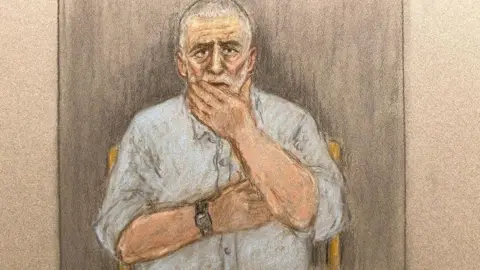
For someone who's lost nearly 40 years of his life as a result of a crime he didn't commit, Peter Sullivan strikes a unusually optimistic outlook.
In our conversation last month, for what was his first interview since being released from prison in May, he was cheerful and eagerly anticipating getting to Anfield to watch Liverpool play for the first time since he was detained in 1986.
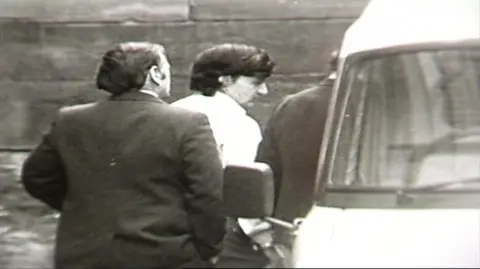
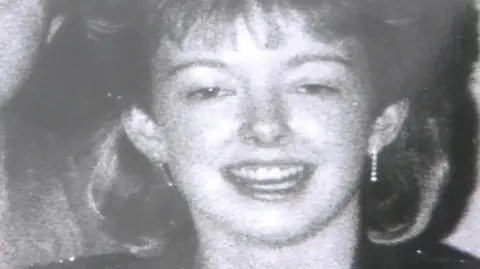
That was the year of the brutal homicide of Diane Sindall in his home town of Birkenhead - an incident he said he was merely aware of because someone spoke to him in a pub at the time and said, "reportedly there's been a murder".
When he was found guilty the following year at Liverpool Crown Court - he was condemned to a extended term in some of Britain's most secure category A prisons where he would be hounded by his tabloid nicknames "Birkenhead's Monster", "The Mersey Ripper" and "Lunar Killer".
Adapting to a Modern World
Ahead of our conversation, he was rich with anecdotes about how since his exoneration he has had to adapt to a completely different world.
When he was detained, Margaret Thatcher was in Downing Street, no one had heard of the internet and Europe was still separated by the Iron Curtain.
He explained watching the demolition of the Berlin Wall from a shared television in prison.
Mr Sullivan explained how trips to the shops now show how "everything's changed" - from trying to work out how self-checkouts work to realising that "instead of having a cheque book, you've got it on your phone".
Technological Adjustments
His confinement means he has been ignorant of the way so many aspects of everyday life have evolved - comparable to someone who has been unconscious since the 1980s.
"Having endured so long in prison and learning there's no DHSS [Department of Health and Social Security, now the Department for Work and Pensions (DWP)] where you can receive your money - you're thinking, 'Wow, what's going on here?'"
He now has a mobile device, after finding out doctor's appointments need to be arranged on something he now knows is called an 'app'.
He first became knowledgeable about them when he was sitting on a bus shortly after his liberation and saw people twiddling with smartphones. He only recognized they were phones when he saw someone put one to their ear.
Emotional Impact
Mr Sullivan's 14,000 days in prison have also led to an predictable sense of system dependency.
He described how after his freedom, one morning in his flat he returned to his bedroom and positioned himself on his bed, because he was automatically waiting for a prison officer to come and secure him into his cell.
"You've got to be at your door at a designated moment, otherwise the officers will go off at you", he said.
"I was just sitting there thinking, 'What am I doing?'"
Desiring Answers
But Mr Sullivan's positivity is balanced by a yearning for answers about how he ended up being charged with an infamous murder that he was innocent of, and a bewilderment about why he still has not had an admission of error.
"My entire life vanished", he said.
"My liberty was taken, I lost my mother since I've been in prison, I've lost my father.
"It hurts because I couldn't be present for them", he said.
"I cannot proceed with my life if I can't get an explanation off them."
"My only request, an apology [and to understand] the cause behind they've done this to me", he said.
Police Statement
Merseyside Police said "there would be little benefit to be gained for a review of this matter today" because of "developments to investigative techniques and progress in the law over the last 40 years".
The force did forward some of Mr Sullivan's allegations to the police watchdog, the Independent Office for Police Conduct (IOPC), who will now investigate his claims that officers assaulted him and intimidated to link him to other crimes if he failed to confess to Diane Sindall's murder.
When asked if it would issue an apology, the force did not specifically respond the question, but as part of a lengthy statement it said: "The force recognizes that there has been a grave miscarriage of justice in this case".
Looking Ahead
Mr Sullivan told me about his simple goal - an ambition that he said he had lost hope of being able to accomplish at some points over his nearly four decades behind bars.
"The sole objective to do now is proceed with my own life and progress as I was before, and enjoy my remaining years now".
His prospects may be made easier by government monetary award, paid to victims of wrongful convictions.
This scheme is limited at £1.3m, a maximum which it is estimated his final compensation will get very close to.
But the process is not automatic, and it is lengthy.
Andrew Malkinson, whose conviction for a rape he had no involvement in was quashed in 2023, was only given an interim compensation payout earlier this year.
Guilty prisoners who confess to their crimes and are released get a housing and some help with living expenses. Mr Sullivan, as an wrongly convicted individual, is not qualified for that help.
And so he is surviving a basic lifestyle, with his basic aspirations - although many believe he is a millionaire in waiting.
His attorney, Sarah Myatt, said "no amount that you could say that would be enough for forfeiting 38 years of your life".
