
Woman Accused of Stalking Madeleine McCann's Parents, Court Told


A Polish national who asserted to be the missing girl "pursued that myth" and harassed the missing girl's parents by sending emails, placing telephone calls and appearing at their address, a court has heard.
Karen Spragg and the second defendant conducted a "systematic intimidation", the court was informed, and in Ms Wandelt's case, that occurred over two and a half years.
On Monday, jurors were told the defendant consistently asserted she was Madeleine and was abducted and taken to Poland.
The first accused and the second accused each contest a count of stalking resulting in significant distress and anxiety to Madeleine's parents between mid-2022 and February this year.

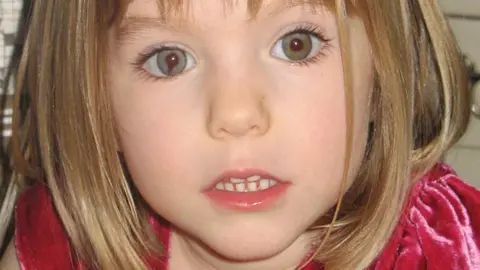
The child's vanishing in 2007 - at the three years old during a vacation in Portugal - is among the most extensively covered child disappearance incidents and continues unresolved.
Legal counsel also mentioned the global attention that Madeleine's case had brought on the family.
"One of many devastating outcomes for Madeleine's parents has been their constant inability to avoid the spotlight of media attention that accompanied that tragedy.
"The focus they have experienced has not always been sympathetic, sometimes far from it.
"There continues to exist a number of people who continue to fail to recognize their situation and perpetuate unfounded claims.
"Unfortunately, these two defendants fall into that latter group."
Escalating Behavior
Testimony revealed from June 2022, Ms Wandelt had started telling to "any willing listener" that she was the missing child.
Legal authorities said that, in January 2023, Ms Wandelt was in communication with a organization in Poland established to assist with long-term disappearance incidents and offer support and advice to people looking for individuals who had gone missing.
According to the prosecutor, the defendant initially said she was the disappeared child from Germany.
But after these assertions were dismissed by the organization, Ms Wendalt then reached out to the charity with a conviction she could be another missing child - a disappeared infant from Utah in the United States - before messaging them about her insistence she was the British missing child.
'Did Not Deter'
The defendant's conviction escalated to an attempt to call the hospital where the parents were employed.
A lengthy telephone conversation to the switchboard led to a report back from the health service representative to the investigation team, the British investigation into the vanishing.
Court proceedings revealed Ms Wandelt made further attempts to contact the authorities and then the father personally through electronic mail in mid-2023.
In one email, she wrote: "I could be your child, it's possible I am the missing girl."
She added people were "trying to cover up the case" and claimed there were resemblances between her and the child, including having marks in the same places.
But her attempts went unanswered, which court officials said "failed to discourage" Ms Wendelt - who then made communication with Madeleine's younger sister the sibling via social media.
Informing her she was her "sole chance", she transmitted altered photographs to show they were "somehow related" and asserted possessing recollections of life before the abduction, the court heard.
These claims, the court heard, were repeated in this year when the defendant is alleged to have "repeatedly" messaged Mrs McCann's cell phone over the course of a day - calling her "mother", claiming to recall giving food to the family's son the boy, of playing children's games in the rear yard of the residence in Rothley, Leicestershire, and of the night Madeleine was abducted.
In one message, she stated: "I recall you visited my room before the incident, touched my hair and said 'I love you and I will find you'."
The trial of the first defendant, of Jana Kochanowskiego in the Polish city, the country, and the second defendant, of a location in Cardiff, continues.
